The Guide to Using an eSIM for Europe Travel
The Guide to Using an eSIM for Europe Travel
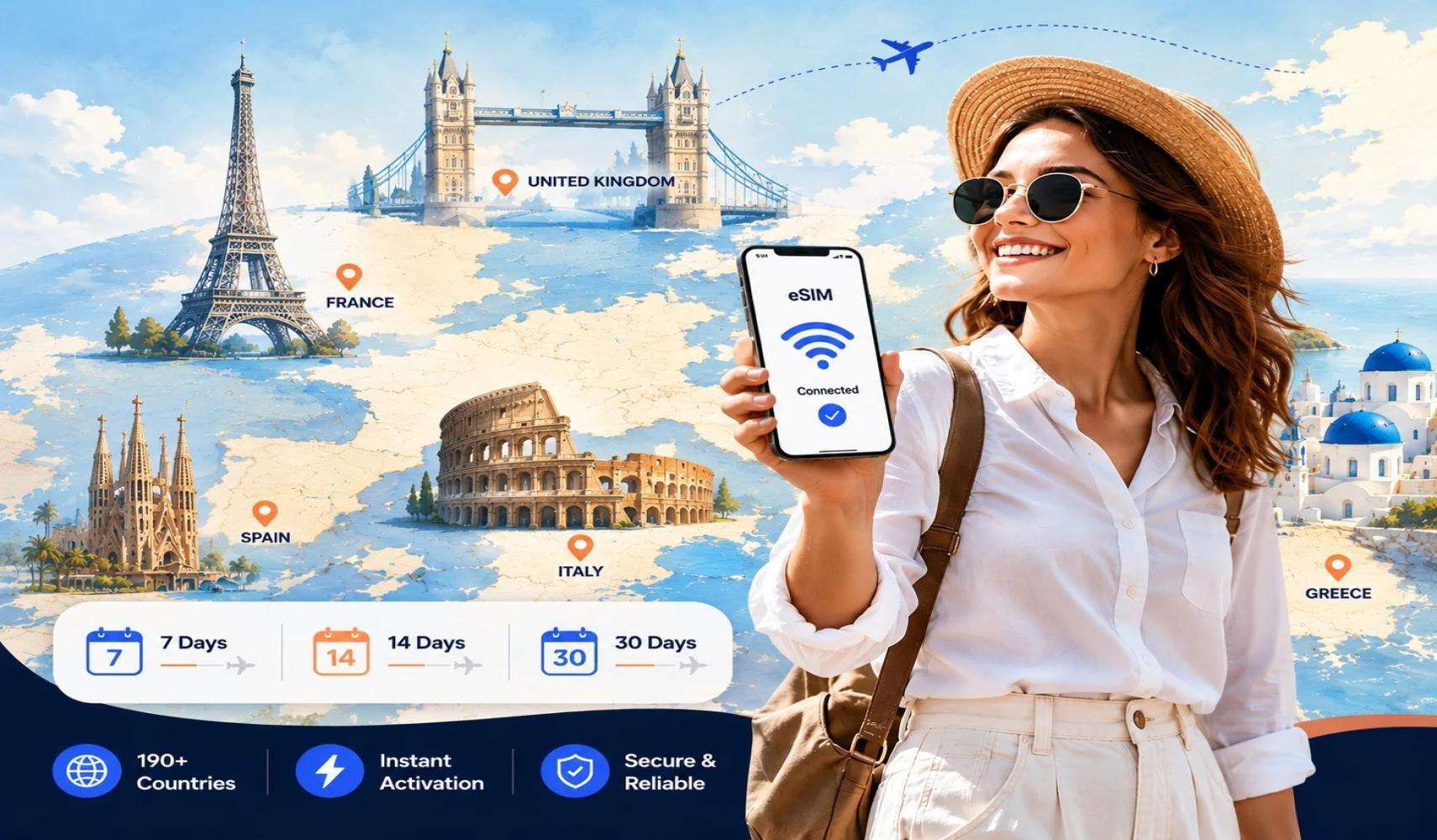
The "eSIM for Europe Travel 2026" guide highlights how digital SIM cards eliminate expensive carrier roaming fees and the hassle of swapping physical plastic SIMs when traveling across European countries.
Stepping off a plane or train into a new European country used to trigger an immediate, stressful routine. You either had to hunt for a sketchy airport kiosk to buy a plastic SIM card, or brace yourself for a massive roaming bill from your home network provider.
In 2026, the travel landscape has changed. Regional travel eSIMsare the standard way to stay connected across Europe.
By downloading a digital cellular profile before you leave home, you can unlock instant, high-speed data that follows you across borders. This comprehensive travel guide covers exactly what it is like to use an eSIM on the ground, how data roaming actually works across European borders, and how to manage your connection like a seasoned digital nomad.
The Traveler’s Reality: Why a Regional eSIM Changes Everything
When you are exploring Europe, your travel itinerary is rarely limited to just one city or country. You might wake up in France, take a midday train through Belgium, and fall asleep in the Netherlands.
A regional Europe eSIM is designed specifically for this type of border-hopping. Instead of locking you into a single local phone network, a regional eSIM acts as an open passport for data.
Seamless Border Handoffs
The biggest advantage of a travel eSIM is its ability to seamlessly switch networks at international borders. When your train crosses from Germany into Austria, your phone does not drop its connection. The eSIM automatically talks to the local towers, drops the German carrier, and hooks into the Austrian carrier in seconds. You never have to swap physical cards or change your device settings.
Keeping Your Home Number Active
Traditional roaming required you to take out your home SIM card, meaning friends, family, and banks could not reach you via text or regular phone calls. With an eSIM, your phone runs two networks at the exact same time. You can keep your primary home SIM active to receive important two-factor authentication codes, while routing all your heavy map navigation, photo uploading, and web browsing through the cheap travel eSIM data line.
How Multi-Network Roaming Operates on the Ground
To understand why an eSIM feels so smooth on a European road trip, you have to understand multi-network roaming.
When you buy a standard SIM card from a specific carrier inside France, your phone is fiercely loyal to that single network. If you drive into a rural valley where that carrier has a weak signal, your internet drops.
Travel eSIM profiles work differently. They partner with multiple tier-1 networks in every single European country. For example, while traveling through Italy, your eSIM might use TIM’s network while you are in downtown Rome, but instantly switch to Vodafone’s network when you head out into the Tuscan countryside.
Network Availability Across Key Regions
- Western Europe (France, Germany, UK): Expect ubiquitous 5G coverage in almost every major city and high-speed rail line.
- The Alps (Switzerland, Austria): Network signals remain remarkably strong even on high-altitude trains, though tunnels will cause brief drops.
- Southern & Eastern Europe: While major hubs have excellent 5G, rural coastal villages or historic old towns with thick stone walls may occasionally drop down to stable 4G LTE.
Step-by-Step Setup: From Your Couch to a European Cafe
Setting up a digital SIM profile takes less than five minutes. The golden rule of travel tech is to always install your eSIM the day before you depart while you are still connected to your stable home Wi-Fi network.
Step 1: Verify phone compatibility (Go to Settings > Cellular > Add eSIM)
│
Step 2: Complete your digital purchase online to receive your unique QR code
│
Step 3: Scan the QR code using your smartphone's camera to download the profile
│
Step 4: Label the new plan "Travel Data" to keep it separate from your home line
│
└──> Step 5: Turn on "Data Roaming" for the Travel profile ONLY when your flight lands
What Happens When You Land
The moment your plane touches down on the tarmac in Europe, take your phone out of airplane mode. Go into your cellular settings, turn your home line's cellular data off, and turn your new "Travel Data" line on. Within 60 seconds, your phone will lock onto the local airport tower, and you will have instant internet access before you even step foot in the immigration line.
Practical Data Budgeting: How Much Do You Actually Need?
European travel relies heavily on data. You will be using your phone constantly to scan digital train tickets, navigate confusing cobblestone streets on maps, translate restaurant menus in real-time, and call rideshare vehicles.
To avoid overpaying or running out of data mid-trip, use these realistic benchmarks based on common travel habits:
The Light Sightseer (3 GB – 5 GB per week)
This tier is perfect if you use your phone strictly as a tool. It easily handles daily Google Maps navigation, looking up restaurant reviews, ordering an Uber, and sending text messages to family back home.
The Connected Tourist (10 GB – 20 GB per month)
This is the absolute sweet spot for the vast majority of travelers taking a two-to-three-week vacation. It gives you the freedom to post daily photo updates to social media, stream music during long train rides, check emails, and make internet voice calls without constantly worrying about a data meter.
The Digital Nomad (Unlimited / Heavy Data)
If you are working remotely from cafes, uploading high-definition video clips, backing up travel photos to the cloud daily, or hotspotting your phone's connection to a laptop, you will need a plan that offers unlimited data or massive 50 GB+ buckets.
Avoiding Pitfalls: Essential eSIM Rules for Travelers
While eSIM tech is incredibly reliable, a few common mistakes can ruin a travel day or lead to accidental charges from your home carrier.
- Never Delete an Active eSIM: If your internet connection slows down or stops working, do not delete the eSIM profile from your phone. Once a travel eSIM is deleted, it cannot be re-scanned or re-installed. Always use customer support to troubleshoot instead.
- Watch Your Home Carrier Settings: To avoid accidental roaming fees from your home provider, explicitly turn off "Data Switching" in your phone's cellular menu. This prevents your phone from secretly using your expensive home data if the local European network temporarily weakens.
- Check the Country List for Non-EU Destinations: The European Union has standard roaming agreements, but non-EU countries like Switzerland, the United Kingdom, Albania, and Montenegro are often excluded from basic European data packages. If your travel itinerary includes these countries, ensure your eSIM profile explicitly lists them as covered zones.
For global travelers, combining eSIM technology with a second phone number is a total game-changer. An eSIM lets you download local data and voice plans in minutes, granting you a regional second line for cheap international calling whenever you land in a new country. You maintain your home phone number for security logins and urgent calls while using your temporary eSIM line to dial local businesses and contacts without incurring steep roaming fees.

What Is an eSIM The Guide to eSIM Technology
05 Oct 2026
Which Devices Support eSIM
05 Oct 2026
Troubleshooting Common eSIM Activation Issues
06 Jul 2025